
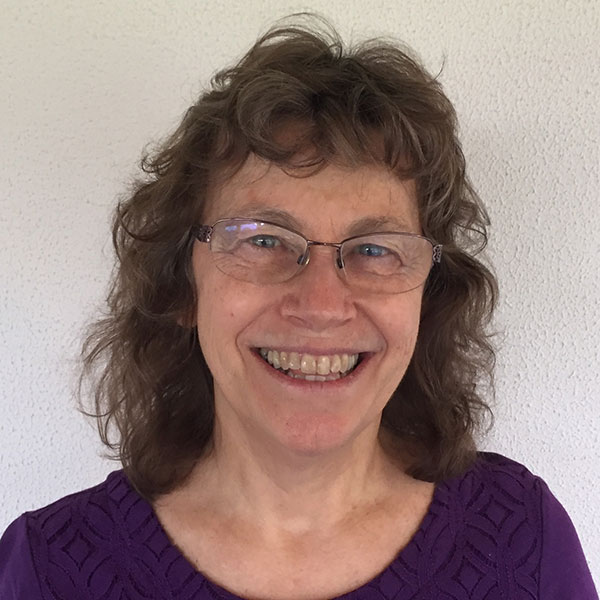
Presenter(s)
Event Details
Topic:
augmentative and alternative communication (AAC)
Format:
lecture
Subject Level:
intermediate
Age Span:
N/A
Target Audience:
AT specialist
consultant
educator
family member / caregiver
occupational therapist
paraprofessional
physical therapist
special educator
speech language pathologist
university professor / personnel
Professional Development Credits
IACET CEUs:
0.01
ACVREP CEs:
1
Presentation Length: 1 hour
Date and Time (Central Daylight Time):
- October 21, 2026
- 10:00 AM - 11:00 AM
Location:
Atrium 4
Description:
What if AAC modeling could open the door to real conversation—not just responses? Children learn language through connection and shared experiences, yet AAC users often have limited opportunities for natural, meaningful, and pragmatically appropriate expression. This session focuses on practical, easy-to-use strategies for modeling AAC in everyday routines to support autonomous communication, interaction, and conversation. Participants will learn how to follow the learner’s lead, reduce reliance on prompting, model without expectation, and expand language naturally within meaningful activities. We will also explore simple, functional ways to collect data within authentic interactions to guide decision-making and document progress. Join us to explore how AAC modeling can move beyond prompting toward authentic, connected conversations.
Learning Outcomes:
As a result of this activity, participants will be able to:
• Participants will identify at least two key features of switch-accessible, auditory-based electronic tools that support independent navigation, active interaction, and engagement in emergent literacy tasks for learners with complex communication needs and CVI.
• Participants will describe at least two strategies for designing or adapting literacy instruction to support auditory learning, such as: phonemic awareness, letter–sound correspondence, and writing.
• Participants will explain at least two principles for selecting, customizing, or evaluating grid-based tools to enhance access to comprehensive emergent literacy instruction for individuals who rely on switch access and auditory scanning.
Disclosures:
Linda Burkhart owns a small home-based consulting business. She has previously sold software activities and books and continues to receive royalties from software activities she developed for use with Mind Express (Jabbla). (These will not be the focus of this session.)
She occasionally provides voluntary consultation to vendors regarding features that support scanning access in software and devices. Linda also provides paid consultation services to school districts, organizations, and families.
In addition, she presents trainings and workshops on topics including multi-modal communication and learning, cortical/cerebral visual impairment (CVI), augmentative and alternative communication (AAC), and PODD, for which she receives honoraria from sponsoring organizations.
Leave A Comment
You must be logged in to post a comment.